Friday, 23 April 2021

How could prescribed burning contribute to grassland conservation in Europe? Our new review paper has been published


Our invited review paper about the applicability of prescribed burning for the conservation of European grasslands has recently been published in Current Opinion in Environmental Sustainability and Health.

The citation of the paper is

Valkó, O., Deák, B. (2021): Increasing the potential of prescribed burning for the biodiversity conservation of European grasslands. Current Opinion in Environmental Sustainability & Health doi: 10.1016/j.coesh.2021.100268

The paper is open access, please click here to download.

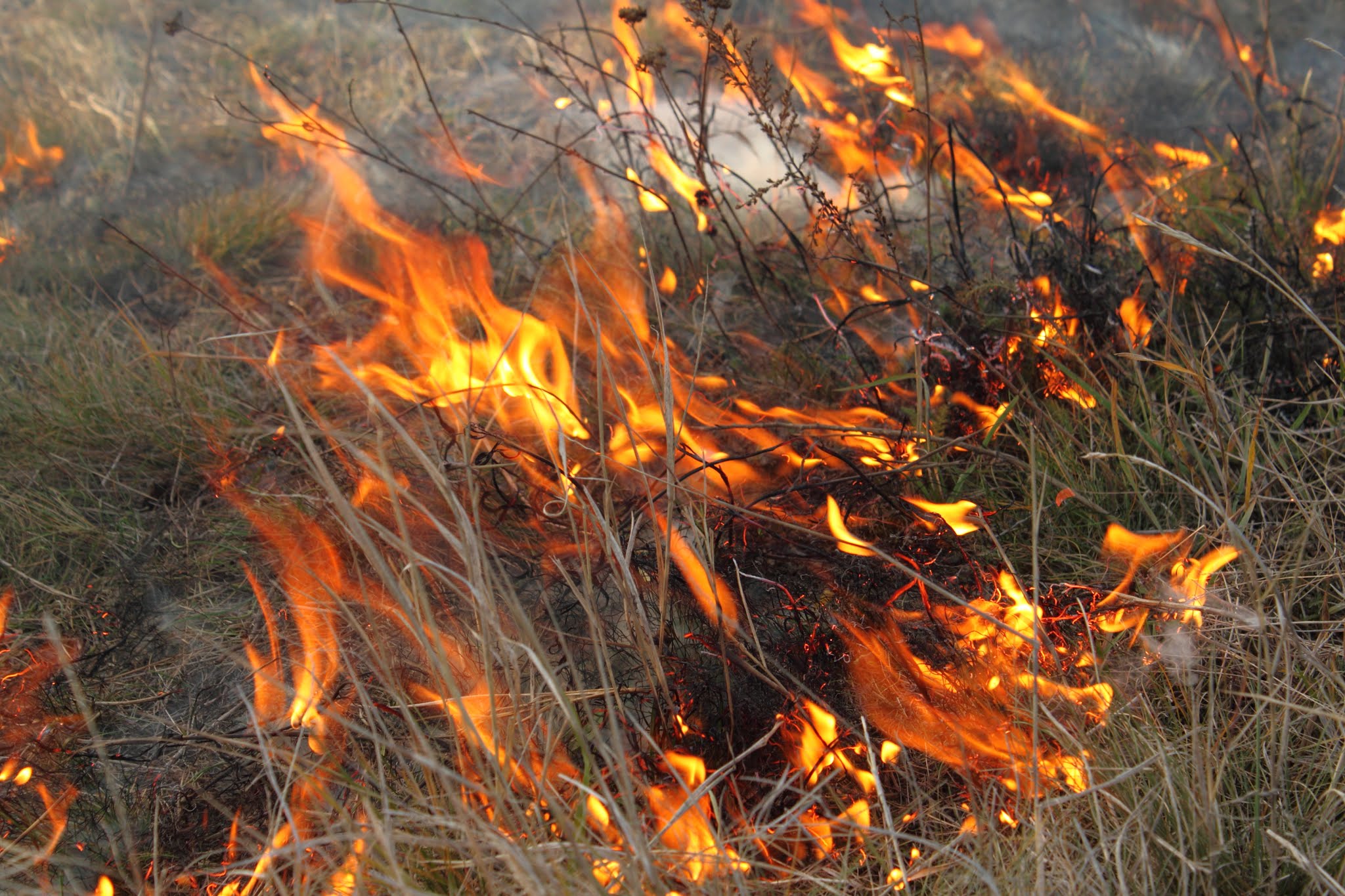
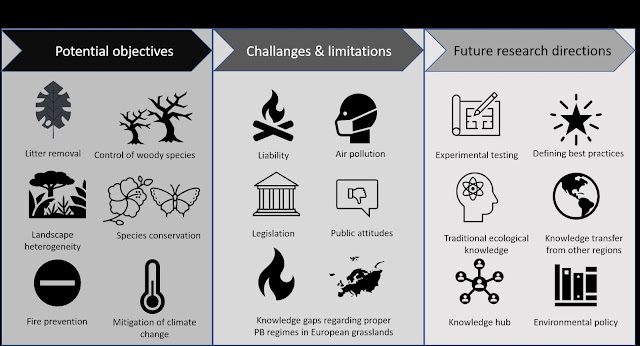
Our aim was to summarize the knowledge related to the applicability of prescribed burning as a potential conservation tool in European grasslands. Prescribed burning (PB) means a carefully planned and executed application of fire in order to reach a specific management objective. In many fire-prone ecosystems, such as the South American cerrado, the South African fynbos or the North American prairies, PB practices are integral elements of conservation and restoration projects aiming to increase the biodiversity in open landscapes. Contrary, in Europe, most PB projects are related to forest ecosystems and shrublands. We found that there were only a few dozens of experimental PB studies in European grasslands, and the large-scale application of prescribed fire is even more scarce. It would be important to gain knowledge about this cost-effective conservation measure, as based on studies from other continents or ecosystems, PB might be a feasible tool to address conservation problems, such as abandonment, intensification, invasive species and climate change.


Our review emphasises that the currently available knowledge about PB effects in European grasslands is not sufficient to completely evaluate its applicability. In most experiments PB was applied in small plots, resulting in homogeneous fire patterns different from wildfires. None of the European experiments applied natural-like fire regimes, but used two approaches instead: either yearly burning of the same parcels for many years or testing the effect of a single PB event. The first approach does not resemble natural fire regimes and does not allow the regeneration of the vegetation between burns. The second approach often had more promising results, as single PB can have favorable short-term effects, but those are less persistent than in case of a complex fire regime with well-suited fire return intervals.

We suggest that the adaptation of the fire regime concept would considerably increase the practical applicability of the findings of future PB experiments in grassland conservation. The use of sophisticated fire regimes matched to the local site conditions could considerably increase the effectiveness of PB to achieve certain conservation goals. It is important to determine optimal PB regimes based on experimental approaches, paleo-data and traditional ecological knowledge, and incorporate the findings also into the legislation.

We also proposed a decision support framework, which can be applied in the planning phase of PB regimes for evaluating the risks and available knowledge related to the application of PB in a particular site for solving a particular problem. Application is suggested only in those cases when all the potential risks can be controlled based on available knowledge. When it is not possible, further studies are needed before PB application.

Decision support framework for evaluating the risks, benefits and available knowledge related to the application of PB in a particular site for solving a particular problem. Based on the answers to the questions (Q1-4) four alternative decisions (D1-4) exist on the applicability of PB in a certain site. In case of knowledge gaps, we list the most important future research directions (R1-4).

Please find below the abstract and graphical abstract of the paper.

Abstract

Prescribed burning (PB), the planned and controlled application of fire is a well-established tool for biodiversity conservation in a plethora of habitats globally. In European grasslands that are threatened hotspots of biodiversity, PB has the potential to address challenges related to several threats such as abandonment, climate change or invasive species. However, its potential is seldom realized both in experimental and real-world conditions. To increase the potential of PB in the management of European grasslands, we suggest adapting the fire regime concept in future studies and to determine optimal PB regimes based on experimental approaches, paleo-data and the disappearing traditional ecological knowledge. For the evidence-based evaluation of PB applicability, a decision support framework is suggested.
 

Monday, 5 April 2021

Study on human-vectored seed dispersal: Germination expriment started

One of our favourite research topics is the study of human-vectored seed dispersal. We would like to understand what role do we humans play in the unintentional dispersal of propagules during our everyday life.

The PhD topic of Katalin Lukács is the experimental study of human-vectored seed dispersal. During the past two years, Kata coordinated a field experiment, where she investigated the outdoor movement of volunteers in the field - the volunteer participants included field biologists and hikers - and collected the propagules from their footwear and socks after their outdoor walks. We will correlate the amount and species composition of the dispersed propagules to a range of habitat, landscape and vector-related factors. The first phase of sample processing was the sorting of the more than 35,000 collected propagules. In the next phase, we will test the viability of the propagules and identify them in a large germination experiment. The work of Kata was awarded by the Universitas Foundation of the University of Debrecen - congratulations!

Katalin Lukács, Réka Kiss, Ágnes Tóth and András Kelemen have recently started the germination experiment - now we are looking forward the results :) Please see below some pictures about the preparation works in this nice early spring weather.


Tuesday, 16 March 2021

Spring, finally :) Monitoring of the spring meadow saffron

Finally, spring has arrived. This is the time of our first annual census of the spring meadow saffron population that we have been monitoring since 2018. This year  Réka Kiss, Laura Godó and Katalin Lukács performed the monitoring.

In the project coordinated by Réka Kiss, we focus on the population dynamics of the spring meadow saffron (Bulbocodium vernum), an early spring geophyte species marked as ‘Vulnerable’ in the Carpathian Basin and ‘Critically Endangered’ in Hungary. Being one of the first flowering plants in spring, in the past it was intensively collected; this fact together with the destruction of its natural habitats resulted in the severe decline and in some cases extinction of its populations. Human-mediated and natural processes, as well as climatic changes further threaten the survival of the species in Hungary. In the project we monitor the population dynamics of the spring meadow saffron, and correlate it with climatic parameters, in order to understand the effect of climatic changes on the populations. The results can contribute to the protection of this endangered species.

Please find below some pictures about this beautiful plant, taken by Laura Godó.


Friday, 26 February 2021

The 6th EDGG-edited Special Feature in Hacquetia is published


The sixth Special Feature edited by Eurasian Dry Grassland Group, alias EDGG (eds. Orsolya Valkó, Stephen Venn and Rocco Labadessa) in the journal Hacquetia has recently been published.

The issue is available online at the Journal's homepage.

The special feature is part of the jubilar 20th issue of the journal Hacquetia (Šilc & Čarni 2021). Hacquetia is a journal of the Slovenian Academy of Sciences. It is a diamond open access journal, which means that the contents are freely available for everybody and there is no publication fee. Both in the regular issue, and in the special issue, there are several interesting papers in the volumes.

The current special feature was initiated by members of the EDGG attending the 16th Eurasian Grassland Conference (EGC) in Graz, Austria in 2019. The papers in this special feature cover a wide range of grassland ecosystems from montane rocky grasslands to lowland sandy grasslands, feathergrass steppes and meadows steppes, and focus on the biodiversity and conservation issues of Palaearctic grasslands. We hope that this article collection will contribute to a better understanding of the ecology of grasslands and support their more effective conservation. The special issue contains five research papers from Slovenia (Čarni et al. 2021), Hungary (Kenyeres et al. 2021, Penksza et al. 2021) and Ukraine (Lysenko et al. 2021, Polchaninova et al. 2021). The Special Feature also includes a report of the EDGG activities in 2019 and 2020 (Dengler et al. 2021) and an editorial paper (Valkó et al. 2021).


Friday, 12 February 2021

Terrestrial habitat islands in the sea of croplands – Our new paper in Frontiers in Ecology and Evolution

Our paper has recently been published in the Research Topic entitled 'Roles and Implications of Functional Traits and Phylogenies to Characterize Refugia Under Increasing Climate Variability' in Frontiers in Ecology and Evolution.

The citation of our paper is:

Deák, B., Rádai, Z., Bátori, Z., Kelemen, A., Lukács, K., Kiss, R., Maák, I.E., Valkó, O. (2021): Ancient burial mounds provide safe havens for grassland specialist plants in transformed landscapes – A trait-based analysis. Frontiers in Ecology and Evolution 9: 619812. doi: 10.3389/fevo.2021.619812

The paper is open access and can be downloaded from here.

The aim of our study was to compare the functional characteristics of grassland specialist plant species in three types of lowland loess grasslands in Hungary, which serve as model grassland habitats typical of agricultural landscapes. The studied habitat types were: 1) Kurgans (i.e. millennia-old ancient burial mounds built by nomadic steppic tribes), that are ancient, relatively undisturbed, highly isolated habitat islands; 2) Verges, that are younger linear structures subjected to several types of human disturbance and 3) Extensive grasslands, that remained intact from arable farming and serve as the reference state of the studied habitat. We were curious about the plant functional traits that make specialist species able to survive in the different habitat types and also, about the community level functional diversity of the studied habitat types.

One of our most interesting result is that we found that kurgans, as terrestrial habitat islands are characterised by specialist species that are functionally similar to species inhabiting oceanic islands. In particular, species on kurgans were more self compatible, had larger seed mass and taller stature than species of verges and extensive grasslands. It is very interesting to see the similar community assembly processes on the younger and less isolated kurgans and the more ancient and more isolated oceanic islands.

Another interesting results is that lurgans and extensive grasslands were characterized by higher functional diversity (both at the level of single traits and multi-trait based functional dispersion) than the verges. This is probably due to the higher level of environmental heterogeneity (you can read about this in our earlier blog post) compared to the homogeneous environment in verges.


Dry grassland on the Falcon-mound, with crested wheatgrass (Agropyron cristatum).
 

Abstract

Due to the intensified land use in transformed landscapes, grassland biodiversity is often restricted to habitat fragments inadequate for arable use or for urban development. In continental parts of Eurasia, the 600,000 ancient burial mounds (called kurgans) built by nomadic tribes of the steppes are amongst the most widespread landmarks providing refuge for dry grassland species. In our study by using plant functional groups and functional traits, we aimed at gaining insight into the ecological and evolutionary processes shaping the structure and the composition of assemblages of grassland specialist plant species on kurgans embedded in the agricultural landscapes of East-Hungary. As a comparison, we also studied roadside verges and pristine extensive grasslands in the same region. We found that despite their small size, due to the lack of human disturbances and high microhabitat diversity kurgans can maintain a high species richness and percentage cover of specialists, especially when compared to verges. We revealed that assemblages of specialist plants on kurgans are characterized by traits typical to terrestrial habitat islands such as self-compatibility, large seed mass and tall stature. Kurgans and extensive grasslands were characterized by higher functional diversity (both at the level of single traits and multi-trait based functional dispersion) which is probably due to the higher level of environmental heterogeneity compared to the homogeneous environment in verges.

 * Finally, a few words about the Research Topic. The Research Topic is a thematic collection of methodological, theoretical and applied frameworks that apply functional and/or phylogenetic analyses to advance the eco-evolutionary understanding around the emergence, functioning, and dynamics of refugia. If you are interested in the Research Topic, it is worth to read the other papers published in the future.

** We also recommend another paper in the Research Topic, by Zoltán Bátori, about the functional characteristics of ant assemblages in karstic microrefugia. We thank for the lot of work of Zoltán and the colleagues at the University of Szeged, Department of Ecology; and we are happy that we could take part in this interesting study.

The citation of the paper

Bátori, Z., Lőrinczi, G., Tölgyesi, C., Módra, G., Juhász, O., Aguilon, D. J., Vojtkó, A., Valkó, O., Deák, B., Erdős, L., Maák, I. E. (2020): Karstic microrefugia host functionally specific ant assemblages. Frontiers in Ecology and Evolution 8: 613738. doi: 10.3389/fevo.2020.613738

This paper is also open access, and can be downloaded from here.

Monday, 11 January 2021

Recovery of extremely overgrazed grassland after grazing exclusion: New paper in Arid Land Research and Management

 Overgrazing causes serious problems in rangeland ecosystems and for human livelihoods worldwide, especially in the arid and semiarid regions. Too intense grazing, trampling and manuring have profound effects on vegetation composition, support the encroachment of weeds and leads to soil erosion. Sheep grazing gardens with fixed fence became increasingly popular and widespread in many parts of Europe, causing a rapid degradation of to the affected vegetation. In our recently published paper, we studied the vegetation of an experimental sheep grazing garden affected by extreme overgrazing (25 sheep per hectare) and evaluated the short-term vegetation recovery after grazing exlusion. The first author of the paper is Krisztina Varga, my former MSc student, who now works at the Karcag Research Institute of the University of Debrecen.

The citation of the paper is the following:

Varga, K., Csízi, I., Monori, I., Valkó, O. (2021): Threats and challenges related to grazing gardens: Recovery of extremely overgrazed grassland after grazing exclusion. Arid Land Research and Management doi: 10.1080/15324982.2020.1869120

Abstract

Overgrazing causes serious problems for rangeland ecosystems and human livelihoods globally. Sheep grazing paddocks with fixed fences have become increasingly widespread in Europe; however, their effects on biodiversity have rarely been discussed. Our aim was to measure the degradation of grassland vegetation in an experimental sheep paddock in Central-Hungary, and evaluate recovery of alkali grasslands after the exclusion of grazing. We compared the vegetation of heavily overgrazed parcels to parcels excluded from overgrazing, treated with three doses of manure (0, 20 and 40t/ha), in the first three years of grassland recovery. The overgrazed parcels were dominated by nutrient-demanding ruderal plant species and the cover of target grassland species was only 19.8% in the third year. After grazing exclusion, the cover of target grassland species increased to 81.0% for Year 3. The dominant grass Festuca pseudovina became more abundant in the excluded parcels (51.1%) than in the overgrazed ones (8.9%). At the end of the experiment, the rate of degradation (0.2 vs. 3.7) and the cover-weighted ecological indicator values for nutrients (3.8 vs. 5.1) were significantly lower in the exclosures than in the overgrazed parcels. Manuring did not have a significant effect on grassland recovery; thus, it is not necessary in the studied ecosystem. We recommend avoiding grazing paddocks with fixed fence especially in areas harboring habitats of high conservation value. Besides resulting in the degradation of grasslands, grazing paddocks also act as landscape scars and propagule sources of problem species that might negatively affect the surrounding landscape.

Sheep grazing in alkali grasslands in the Hortobágy. Photo: Balázs Deák.

Monday, 4 January 2021

Linking environmental heterogeneity and plant diversity at intermediate scales - Our new paper in Science of the Total Environment


Our new paper about the link between environmental heterogeneity and plant diversity has recently been accepted in Science of the Total Environment.


Deák, B., Kovács, B., Rádai, Z., Apostolova, I., Kelemen, A., Kiss, R., Lukács, K., Palpurina, S., Sopotlieva, D., Báthori, F., Valkó, O. (2021): Linking environmental heterogeneity and plant diversity: the ecological role of small natural features in homogeneous landscapes. Science of the Total Environment 763: 144199 [IF2019: 6.551]

The paper is open access and can be downloaded by clicking here

Environmental heterogeneity (EH), encompasses spatial and temporal heterogeneity in biotic (land cover, vegetation) and abiotic (climate, soil and topography) components. EH is considered one of the most important drivers of species richness patterns from local to continental scales. The conservation importance of EH is being recognised globally, due to the generally positive relationships between EH and biodiversity. However, there are several open questions regarding EH-biodiversity relationships. Although the effects of EH components are often interrelated and all of them affect biodiversity patterns, most studies consider only one, or a few, of them. Moreover, studies generally focus either on a continental/landscape-scale or a fine-scale of a few centimetres/metres, but there are only a few studies concentrating on intermediate spatial scales.

The relationship between environmental heterogeneity and plant diversity is well known in mountain environments.

For establishing links between EH components and biodiversity at intermediate scales of a couple of metres, small natural features (SNFs) provide an outstanding opportunity. SNFs include field margins, road verges, midfield islets, stone walls, karst dolines, ancient earthworks and burial mounds, all of these can be regarded as distinct entities differing from their surroundings in their abiotic and biotic conditions, and they are often characterised by a high level of EH. These SNFs are characteristic elements in many landscapes, but little is known about the relationship between EH components and the associated biodiversity patterns found on them. For our study, we chose several millennia-old ancient burial mounds (built by nomadic steppe tribes), which are one of our favourite natural features. If you are particularly interested in these iconic landscape elements, please read our former blog post here.

Ancient burial mounds in Bulgaria - the most impressive ones can be as high as ten metres and they are covered by dry grasslands.

In this study, we focused on all components of EH that are potential drivers of vegetation patterns, and can contribute to the maintenance of grassland biodiversity on topographically heterogeneous SNFs. We surveyed ancient burial mounds covered by dry grasslands in the Pannonian (Hungary) and Continental (Bulgaria) biogeographical regions of Europe, in order to test whether the effects of EH on vegetation composition depends on the biogeographical region. In order to understand the interactions between EH components and reveal their effects on plant diversity and species composition, we studied the five main EH components on mounds using nearby plain grasslands as a reference. On each mound, we investigated five mound microsites (slopes with different main aspects and top).

Figure showing our sample design.

We found very interesting patterns in the microclimate parameters on the slopes of the mounds. The figure below shows that mound microsites were characterised by considerable fluctuations between extreme positive and negative relative values of air temperature (T), relative humidity (RH) and vapour pressure deficit (VPD). In the morning, the air of the east-facing slopes warms up faster than the plain grassland or the top, and becomes dry, while west-facing slopes remain cool and humid. In the afternoon, this pattern reverses, but west-facing slopes dry and warm up to a lesser degree. Diurnal variations are due to the temporal changes in solar radiation received by the different microsites. East-facing slopes warms up and consequently become drier earlier than plain grasslands and other mound microsites. It is very impressive that these patterns can be detected in landscape elements that are maximum 10 metres high!

Diurnal variations of air temperature (ΔT), relative humidity (ΔRH) and vapour pressure deficit (ΔVPD) in the studied mound microsites, relative to the values detected in plain grasslands (dotted line).

As shown by the diurnal variations, the difference between north- and south-facing slopes was greatest when the Sun is at the zenith (at about 13:00). At that time north-facing slopes were 5.1°C cooler and south-facing slopes 7.6°C warmer than plain grasslands. In the case of mounds occurring in regions with a generally harsh continental macro-climate, small-scale micro-topographical differences are equivalent to large latitudinal (several hundreds of kilometres) and elevation differences (the observed 12.7°C range in temperature within the small area of a mound is roughly equivalent to a shift of couple of hundred metres in altitude) over very short horizontal distances. The microclimatic differentiation detected on the mounds in our study highlights the importance of small landforms in plain areas that can introduce a high level of EH to the otherwise homogeneous landscape.

North-facing slope of a mound in Bulgaria covered by Elymus elongatus and Ranunculus illyricus.

We found that the different abiotic environmental conditions represented by microsites were reflected in the vegetation patterns; thus, the microsites studied function as microhabitats for plant species. On the site level we detected clear patterns in both regions; the vegetation composition of mild and harsh mound microhabitats and the grassland were well-separated in all the sixteen sites.

Ordination diagrams from the non-metric multidimensional scaling, displaying the species compositions of the studied microsites (HU – Hungary; BG – Bulgaria). Large panels show the patterns on the regional level (points with the same colour denote the average of five plots per microsite per site), whilst small panels show the species composition of different microsites on the site level (one point represents one plot).

In general, the mild north- and west-facing slopes had similar species composition, dominated by specialists such as Elymus hispidus, Stipa capillata, Inula germanica, Helianthemum salicifolium, and Inula oculus-christi, and only a few species indicating degradation. The harsh south-facing slopes and the top shared similar species composition, harbouring stress- and disturbance-tolerant generalists and weeds (e.g. Elymus repens, Bromus spp., Senecio vernalis). The varying but harsh east-facing slopes showed a scattered pattern. Plain grasslands were characterised by a rather distinct species pool in both regions.

Our findings highlight that SNFs have a crucial conservation importance in plain landscapes, which cover one third of the global land area. We found that even landforms, which are only a few metres high, can introduce a large variation of environmental heterogeneity into these areas. Besides the more than half a million Eurasian mounds, there are also many analogous and globally widespread landforms (inselbergs, dolines, mounds built by ecosystem engineering rodents) that can have a similar function in introducing EH to environmentally homogeneous landscapes, and therefore driving local and landscape-scale diversity patterns within these landscapes.

Graphical abstract summarising the key findings of the paper.

Abstract

Small natural features (SNFs), such as road verges, midfield islets, rocky outcrops and ancient burial mounds, provide safe havens for species of natural habitats in human-modified landscapes; therefore, their great ecological importance is in contrast to their small size. SNFs often have a high topographical heterogeneity and abiotic conditions, which differ from their surroundings; therefore, they provide a unique opportunity for establishing links between environmental heterogeneity (EH) and biodiversity. However, no study has so far investigated the EH components of topographically heterogeneous SNFs in a comprehensive framework, by linking environmental and biotic parameters. To fill this knowledge gap, we evaluated the EH components and their effect on biodiversity on ancient mounds covered by semi-natural grasslands in the Pannonian (Hungary) and Continental (Bulgaria) biogeographical regions. We designated 16 study sites, each containing a few-metre-high mounds with five microsites (top, north-, east-, south- and west-facing slopes) and a nearby plain grassland. At each microsite, we measured soil moisture, soil chemical properties, solar radiation and microclimate; and recorded the cover of vascular plants in a total of 480 plots. On the mounds, topographical heterogeneity was associated with sharp differences in microclimate and soil properties. Besides the contrast between mild north-facing and harsh south-facing slopes, east- and west-facing slopes also sustained unique microsites characterised by dynamic diurnal changes in air temperature and vapour pressure deficit. Various combinations of the EH components resulted in unique plant species compositions within the microsites, and supported the co-occurrence of species typical of contrasting habitat types, even within a couple of metres. By combining high-resolution measurements of abiotic factors with fine-scale vegetation sampling, our study provides evidence that widespread SNFs with complex topography harbour several grassland-specialist plant species and introduce a high level of EH to otherwise homogeneous plain landscapes, which cover one third of the global land area.

Group photo in our expedition in Bulgaria; from left to right: Salza Palpurina, Iva Apostolova, Desislava Sopotlieva, Réka Kiss, Katalin Lukács, András Kelemen, Orsolya Valkó, Balázs Deák.