Sunday, 16 February 2020

New paper about establishment gaps, an interesting new restoration tool


Our paper, first-authored by Réka Kiss, about establishment gaps has recently been accepted in Restoration Ecology. Please click here to download the pdf.

Kiss, R., Deák, B., Tóthmérész, B., Miglécz, T., Tóth, K., Török, P., Lukács, K., Godó, L., Körmöczi, Zs., Radócz, Sz., Kelemen, A., Sonkoly, J., Kirmer, A., Tischew, S., Švamberková, E., Valkó, O. (2020): Establishment gaps: biodiversity hotspots to support the colonization of target species in species-poor grasslands. Restoration Ecology doi: 10.1111/rec.13135 [IF2018: 2.826]

What are establishment gaps and what are they used for?

Soil seed bank can be a source of species which contribute to the spontaneous recovery of grasslands; however, its restoration potential is often limited because there are lot of grassland species, which have no persistent seed bank. Therefore, in severely degraded areas we cannot rely on spontaneous grassland recovery solely from the seed bank. This propagule limitation can be aggravated by the lack of seed rain of target grassland species due to their low dispersal ability and the lack of source populations in intensively used landscapes. Besides propagule limitation, favourable niches for the establishment of grassland species are also limited in perennial-dominated, dense grassland swards. Both the accumulation of living and dead biomass and the encroachment of competitor species can hinder germination and establishment of grassland species. Propagule and microsite limitation together halt the spontaneous recovery of species-rich grasslands and their effect generally increases with the time elapsed since the beginning of the degradation. The success of restoration activities can be enhanced by overcoming the above mentioned two major limitations, by propagule addition to the target area (e.g. seed sowing, hay and topsoil transfer), and by provision of microsites either by natural (animal perturbations or grazing by wild animals) or human-induced (mowing, tilling, grazing by livestock) disturbances. Such gaps have reduced competition which is important especially in the early and most vulnerable stages of plant establishment.


Restored grassland that has been sown by low-diversity grass seed mixture. The vegetation is composed by the very dense canopy of the sown grasses, leaving very few opportunities for the establishment of other grassland specialist species.

The idea of using ‘establishment gaps’ for increasing the plant diversity of species-poor grasslands is based on reducing the microsite limitation by opening gaps in the sward and by overcoming propagule limitation by sowing seeds of target species in the openings. We developed and tested the method during the Pro-Seed DBU project and wrote about the first results here.

How can we create establishment gaps?

We used tillage to open gaps of 1-m2, 4-m2 and 16-m2 size in the dense grass sward of six species-poor restored grasslands in the Great Hungarian Plain. We sowed high-diversity seed mixtures of 35 native species into all gaps.
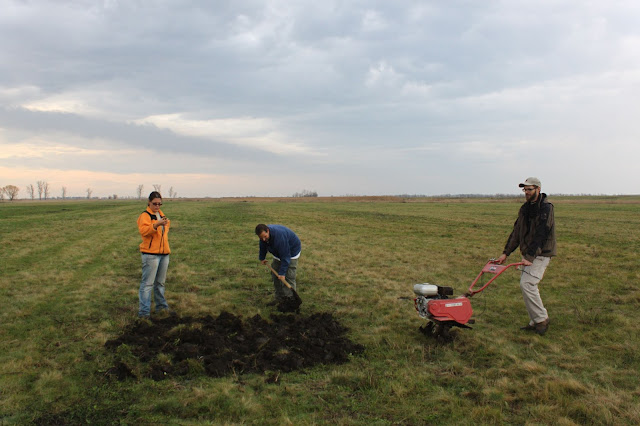
The first step: We create the gap by tilling and opening up the dense sward in small patches. This can be a very hard work on the compact alkaline soils which are characteristic at our study site.
After creating a seedbed, a diverse seed mixture is sown at the gaps.
We harvested seeds of species typical to alkaline and loess grasslands and compiled a diverse seed mixture of 35 species. We sowed this seed mixture at a density of 100 kg/ha in the gaps.

Our results indicated that most of the sown species were able to establish permanently in the gaps. The total cover and the cover of perennial sown species increased and the cover of short-lived sown species decreased independently of gap size. There was only a moderate level of weed abundance in the gaps, and weed cover decreased over the years. The sown target species started to colonize the species-poor grasslands surrounding the gaps within five years. The highest number of species and individuals dispersed from the medium-sized gaps, as they had a more stable development than smaller gaps and were exposed to lower grazing pressure than large ones.

Species and flower-rich biodiversity hotspot in the establishment gaps three years after sowing.

Small gaps were less effective in supporting establishment and colonization of sown species than the large- and medium-sized ones. However, contrary to our expectations, not the largest establishment gaps were the most effective but the medium-sized ones. The medium-sized gaps supported the highest species number per colonization plot, the highest number of individuals, the highest number of flowering species, and the highest total number of flowering shoots. We found that vegetation development and establishment of sown species is rather stochastic in the small gaps. Recolonization by grasses is the most likely in the small gaps with low surface:perimeter ratio, which hinders the establishment and colonization of sown species. Thus, larger gaps are more stable and less susceptible to grass recolonization and provide more favourable conditions for sown species to persist.

The hard work of field biologists: monitoring the transects for counting the individuals of the sown species around the establishment gaps. This is a really huge work, it means the survey of 1440 plots each year.

Our results suggest that establishment gaps are a widely applicable tools to increase the diversity of species-poor grasslands. Gaps of a few square meters represent a more feasible solution compared to larger openings also for the farmers, because there is only a moderate level of weed encroachment and smaller soil disturbance occurs during their creation. The creation of the gaps does not require heavy machinery, it can be done with basic gardening equipment. The most expensive and labour-intensive part is the compilation of the seed mixture. However, given the small size of the gaps, the necessary amount of seed mixture can be collected within a few days if the donor sites are available in the region.

Sunday, 22 December 2019

New paper about cattle grazing

Our paper about the effects of traditional and crossbred beef cattle grazing on the conservation values of alkaline grasslands and marshes has recently been accepted in Applied Vegetation Science. Please click here to download the pdf.

Kovácsné Koncz, N., Béri, B., Deák, B., Kelemen, A., Tóth, K., Kiss, R., Radócz, Sz., Miglécz, T., Tóthmérész, B., Valkó, O. (2019): Meat production and maintaining biodiversity: Grazing by traditional and crossbred beef cattle breeds in marshes and grasslands. Applied Vegetation Science doi: 10.1111/avsc.12475 [IF2018: 3.568]

Hungarian grey cattle is a robust traditional breed that maintains the highest naturalness values in alkaline habitats.

Sustainable rangeland utilization considering traditions and economic reasons is compulsory for harmonising the needs of the agricultural and nature conservation sectors. For proper rangeland management it is crucial to compare the grazing effects of traditional breeds and crossbred animals of the same species that might have different effect on the rangelands. To fill this knowledge gap, in a grazing experiment we investigated the effect of cattle breeds on the vegetation to test the effects on nature conservation value and agricultural production value. We hypothesized that the effects of cattle grazing on habitat conservation values and forage quality depend on the grazing breed, because breeds differ in selectivity, body size and trampling effect. We recorded the percentage cover of vascular plants in three consecutive years in a total of 60 plots in 12 areas grazed by traditional (Hungarian Grey cattle, 0.61 AU/ha) and large-sized crossbred beef cattle (Charolais × limousine, 0.68 AU/ha) in marshes and alkaline wet grasslands in Hortobágy National Park, Hungary.

We found that the effect of cattle breed on the habitat conservation values and forage quality are dependent on the habitat type. The traditional breed maintained a significantly higher species number and Shannon diversity in the marshes than the crossbred beef cattle. Grazing of crossbred cattle led to decreasing moisture indicator values in marsh habitats. Our findings revealed that traditional breeds should be prioritized in the management of wet alkaline grasslands and marshes. Crossbred beef cattle might be a substitute but only in case when traditional breeds are not available for the management of alkaline wet grasslands. In marshes, however, we recommend to prioritize the traditional breeds as they maintain higher diversity compared to the crossbred beef cattle.

Alkaline grasslands and marshes of the Hortobágy National Park form one of the largest continuous open landscapes in Europe.

Sunday, 1 December 2019

New paper on the Eurasian Kurgan Database

We have published an 'introduction paper' about the Eurasian Kurgan Database in the Steppe Bulletin

The citation of the paper: 

Bragina, Tatyana M. ; Lisetskii, Fedor N. ; Buryak, Zhanna A. ; Bede, Ádám ; Apostolova, Iva ; Tóth, Csaba Albert ; Báthori, Ferenc ; Bán, Miklós ; Deák, Balázs (2019): Евразийская база данных о курганах поможет сохранить биоразнообразие степей /Eurasian database on kurgans will help to preserve biodiversity of steppes/. Степной Бюллетень /Steppe Bulletin/ 53: 36-40. 

The paper can be downloaded here

Eurasian steppes have an essential role in conserving biodiversity, but due to the huge habitat loss in the past centuries they are often preserved only in small refuges. Among such refuges are the ancient steppic burial mounds (the so called ‘kurgans’) which have a high cultural and historical importance and are also essential sites of nature conservation. Despite their high number (approximately half million) and conservational importance there is a huge lack of knowledge on the locality and conservational state of the kurgans in most regions of Eurasia. To fill this knowledge gap, we built a public database which allows to record and query basic information on their cultural values and factors (such as land cover type, threatening factors, cover of woody species) that might serve as a basis for their effective conservation. The database provides a transparent, public and easy-to-use source for conservation managers and landscape planners focused on grassland conservation. In addition, it also provides background information for other associate disciplines and public agencies dealing with the protection of cultural heritage. 


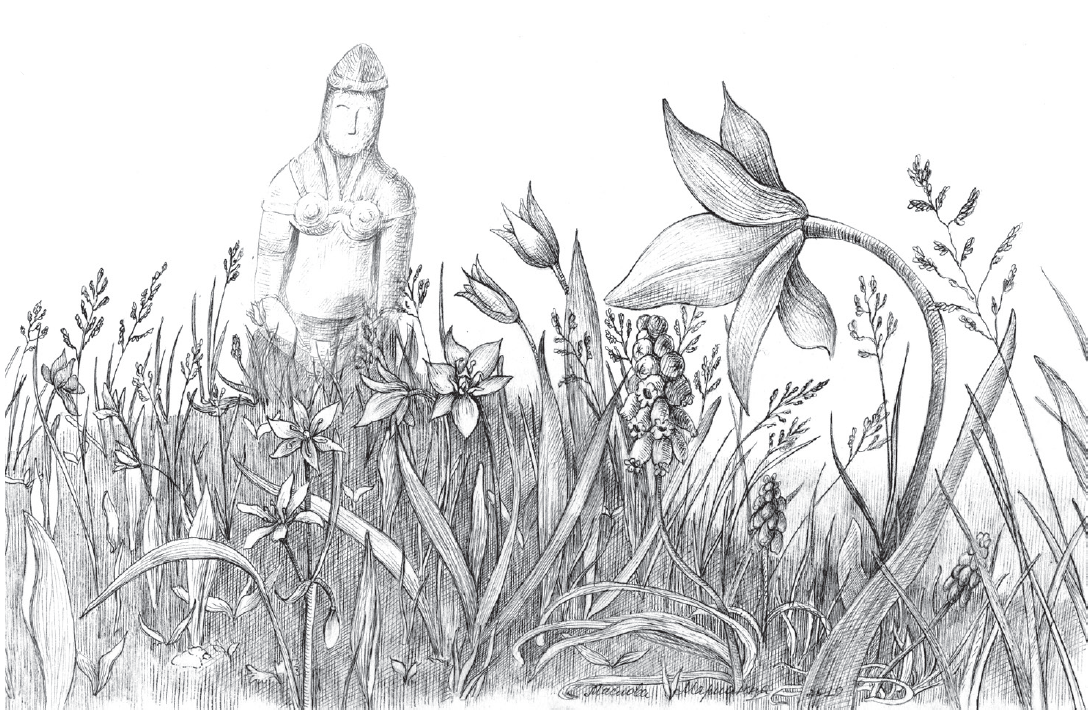
Meadow steppe with the statue of a Cumanian lady (половецкая баба). Drawing of Марианны Масловой.

Currently the database contains 2,540 data on Eurasian kurgans ranging from Hungary to Mongolia providing data on their location. Some of the data is provided on the basic dataform, which means we have only the coordinates of the kurgan. But from more than 1,700 kurgans we have detailed data on the land use, threatening factors and cultural values of the kurgans.

Current geographical coverage of the Eurasian Kurgan Database.

All future cooperation partners interested in the building of the database are welcome. Please contact me on the debalazs@gmail.com email address. 

In order to draw attention on the present conservation status of the kurgans across Eurasia we aim to publish a synthesis paper using the data from the database. The planned publication aims to give a comprehensive overview on the current land cover, threatening factors present on and the cultural values associated to the kurgans of the different regions of a wide geographical range. According to the terms and conditions of the Eurasian Kurgan Database data contributors who provided a significant contribution (1, more than 5% of the available data on the complex dataform, or 2, providing valuable data from a new region on the complex dataform) to the Database will be offered a coauthorship in the forthcoming publications. 

You can see our previous publication on this topic here.

Sunday, 24 November 2019

Kurgans in transformed landscapes - Paper in Biological Conservation

Our paper about the role of kurgans in preserving grassland biodiversity outside protected areas has been published in Biological Conservation (link to the online article).

Deák, B., Valkó, O., Nagy D. D., Török, P., Torma, A., Lőrinczi, G., Kelemen, A., Nagy, A., Bede, Á., Mizser, Sz., Csathó, A.I., Tóthmérész, B. Habitat islands outside nature reserves – threatened biodiversity hotspots of grassland specialist plant and arthropod species. Biological Conservation (in press)

In transformed landscapes, many populations of grassland specialist plant and animal species live outside the few protected areas and are often preserved on 'small natural features' (SNFs) such as road verges, field margins and rocky outcrops. In the steppe and forest steppe zones of Eurasia ancient burial mounds (kurgans) are widespread SNFs providing refuge for grassland species. Based on a large-scale botanical and zoological survey of 138 kurgans in Hungary, we compared the management regimes, the presence of threatening factors and the conservation potential of kurgans embedded in non-protected transformed landscapes and in protected areas. We found that kurgans extend the borders of the protected areas by maintaining populations of grassland specialist plants and arthropods (ants, orthopterans, true bugs and rove beetles) even in transformed landscapes. We revealed that the lack of proper management, the presence of anthropogenic disturbances and encroachment of woody species are the most considerable threats to the long-term maintenance of biodiversity on kurgans located outside the protected areas. For their effective conservation a new approach is needed, which can cope with the small area and dispersed localities of the kurgans and can integrate them into the network of other SNFs on a landscape-level. As the ecological importance of kurgans is disproportionate to their size conservation actions focusing on their protection offers a greater rate of return of the efforts than can be expected in case of larger continuous sites.

Map of the surveyed 138 kurgans in Hungary. Notations: blue triangles – kurgans outside the protected areas (n =78), green circles– kurgans inside the protected areas (n = 60). Picture on the top – Két-halom kurgan embedded in intensive agricultural fields; on the bottom – Sáros-ér-halom kurgan surrounded by grasslands.

Sunday, 6 October 2019

Call for contributions to the new EDGG-edited Special Feature in Hacquetia

6th EDGG Special Feature in Hacquetia 2021: Fauna, flora, vegetation and conservation of Palaearctic natural and semi-natural grasslands

The submission of manuscripts for the EDGG-edited Special Feature in Hacquetia 2021 is open. We welcome manuscripts about natural and semi-natural grasslands, on all taxa and from any region in the Palaearctic realm (Europe; West, Central and North Asia; North Africa).

Hacquetia is the international journal of the Biological Branch of the Slovenian Academy of Sciences. It appears in two issues per year, both in print and online. Through offering longer articles, open access publication and free reproduction of colour figures, it is a very attractive publication venue. Currently it is indexed in the Scopus and BIOSIS literature databases, and it is likely to be included in the Web of Science in the near future.

This Special Issue will be the 6th EDGG-edited Special Issue in Hacquetia, following the five successful issues in 2014/1, 2015/1, 2016/2, 2018/1 and 2019/2. This Special Issue will appear as the first issue of 2021, to be published approximately in January 2021, with about 150–250 pages reserved for our articles. It will also contain a report on the EDGG activities of the previous year.

Procedure and deadlines: The deadline for full-text submission is 15 January 2020 and manuscripts will undergo the normal peer-review process. If you are interested in contributing a manuscript for this comprehensive Special Issue, then please contact me and submit your manuscript to me.

Author guidelines can be found at the journal homepage.

Guest Editor Team:

Orsolya Valkó (Hungary, Chair of the Guest Editors)
Stephen Venn (Finland)
Sabina Burrascano (Italy)
Salza Palpurina (Bulgaria)
Rocco Labadessa (Italy)
Atushi Ushimaru (Japan)

Contact for questions and submission of manuscripts:

Orsolya Valkó (valkoorsi@gmail.com)