Our new paper about the impressive ecosystem engineering effect of a large bird has recently been published.
The citation of the paper:
Valkó, O., Borza, S., Godó, L., Végvári, Z., Deák, B. (2022) Eurasian crane (
Grus grus)
as ecosystem engineer in grasslands ‒ conservation values, ecosystem
services and disservices related to a large iconic bird species.
Land Degradation and Development https://doi.org/10.1002/ldr.4314
The paper is open access and can be freely downloaded from the journal homepage by
clicking here.
Ecosystem engineer organisms alter the local environment in a way that they create and maintain habitats or microhabitats for other organisms. The engineered patches are characterised by different structure and functioning compared to the surrounding habitats. Well known ecosystem engineers include corals that create reef habitats or beevers that literally engineer whole landscapes. In one of our
earlier blogposts we wrote about our study on the ecosystem engineering effects of Steppe Marmots. Among birds, woodpeckers are well known engineers that create nesting places for many other birds. In grasslands, the ecosystem engineering effect of birds has been largely unknown.
We studied here a large, iconic bird species, the Eurasian crane which is a protected species across Europe. The global crane population - thanks to the conservation efforts, wetland restoration projects and to the ability of cranes to coexist with intensive agricultural practices - shows a growing trend. Because of this population increase, we expect that the effects of cranes on natural ecosysetms will also amplify, that is why it is timely and important to evaluate the effects of this large bird on the grassland ecosystems.
 |
Eurasian cranes.
|
Hungary is an important stopover area during the migration of cranes. During autumn, 100000 - 160000 birds spend a few weeks in the lowland areas of East-Hungary. Cranes are usually foraging on maize stubbles on crop residue, but regularly visit grasslands where they forage on invertebrates. In grasslands they perform a special feeding habit called 'crane-ploughing': they heavily disturb the soil surface by their bill and remove the vegetation. The disturbed surface resembles to a ploughed area and their size range from a few square metres to a few hectares. These are characteristic landmarks in Hungarian alkaline grasslands, but until our study, their ecological function was unknown.
 |
'Crane ploughing' from the birds' eye view.
|
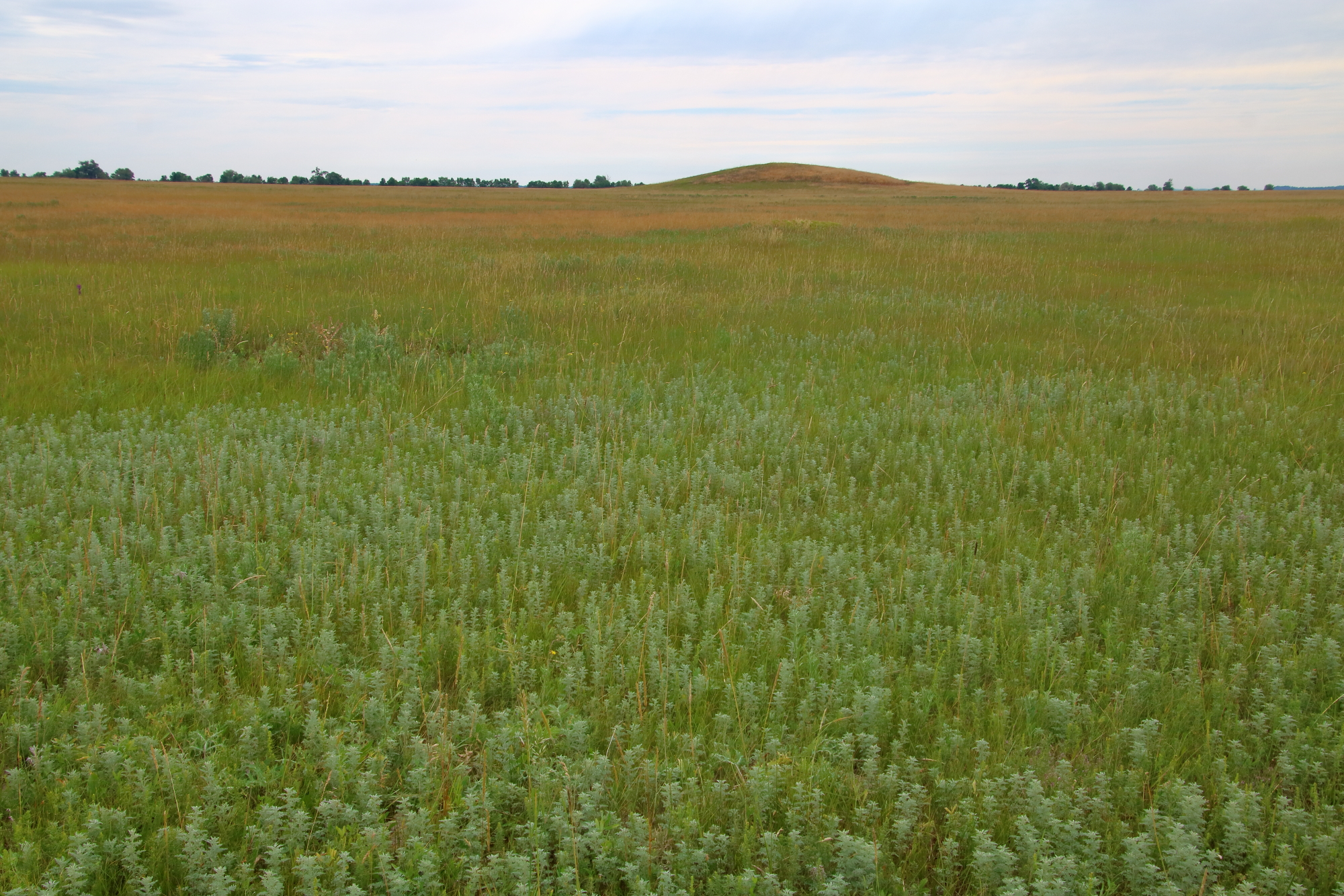
We compared the vegetation of crane-disturbed patches and undisturbed alkaline grasslands in the Hortobágy National Park, at then study sites. We found that the disturbed surfaces were characterised by different structure and function compared to the undisturbed patches. The pioneer vegetation on the disturbed patches sprouted earlier than in the undisturbed grasslands, and was characterised by short-lived species and forbs. The dominant grass species of alkaline grasslands (Festuca pseudovina) had significantly smaller cover on the disturbed patches. The crane-ploughed patches harboured more species and a different species composition compared to the undisturbed grasslands. The abundance and species richness of insect-pollinated plants increased on the disturbed patches which suggests that these areas offer important nectar sources for pollinators in the otherwise grass-dominated habitat. The early sprouting vegetation on the disturbed patches probably provides important forage source for the livestock early in the season, but in the dry summer period the forage quality value decreases considerably.
 |
| Pioneer plants (Erophila verna) and crane feather on the disturbed patches. |
Our study showed that foraging cranes have a fundamental effect on the structure and functioning of alkaline grassland ecosystems, by creating patches with altered vegetation composition and ecosystem functioning.
 |
Vegetation survey in early spring.
|
The abstract of the paper:Large
bird species, such as cranes are involved in human-wildlife conflicts
as they often forage in croplands. The Eurasian crane (Grus grus)
is a large iconic bird species, protected across Europe, which, thanks
to conservation programs and its ability to utilize croplands for
foraging, shows a strongly increasing population trend. This exaggerates
the existing conflicts between crop farmers and cranes spilling over to
natural habitats, where foraging by large flocks can lead to land
degradation. No studies have evaluated the effects of foraging cranes on
grasslands, despite these habitats provide important feeding grounds
for cranes across their whole range. To fill this knowledge gap, we
evaluated the ecosystem engineering effect of foraging Eurasian cranes
on the vegetation of dry grasslands in Hungary. We used indicators of
vegetation naturalness, forage quality, and floral resource provision to
evaluate the ecosystem state from multiple aspects. We sampled 100
quadrats in disturbed patches and 100 in undisturbed grasslands in two
seasons and two years (800 observations). Cranes created distinct
vegetation patches with different species composition from undisturbed
areas. We identified important trade-offs between the positive and
negative effects of the foraging activity of cranes on different
structural and functional components of the ecosystems. The
crane-disturbed earlysuccessional patches increased plant diversity and
floral resources but decreased the area of undisturbed grasslands.
Although crane-disturbed patches could provide forage for livestock
early in the season, the forage quality became poor later in the year.
We highlight the importance of monitoring the landscape-level extent of
the disturbed areas.
.JPG)
.JPG)




.JPG)


