Monday, 19 August 2024

Our new review about urban grassland restoration has been published in Journal of Environmental Management.

Our latest paper, a global review about urban grassland restoration has been published in Journal of Environmental Management. This is a result of a nice cooperation between our research group and Valentin Klaus (ETH Zürich) and Leonie Fisher (University of Stuttgart).

The paper is open access and can be freely downloaded from the journal website (please click here).

Citation

*Fekete, Réka, *Valkó, Orsolya, Fischer, Leonie, **Deák, Balázs **Klaus, Valentin (2024): Ecological restoration and biodiversity-friendly management of urban grasslands – a global review on the current state of knowledge. Journal of Environmental Management 368: 122220.

 *, **: equal contributions.


Urban grasslands, like parks, meadows, vacant lots and other green spaces, play a crucial role in enhancing biodiversity in cities. However, as urbanization accelerates, these green spaces are increasingly threatened by factors like habitat degradation, pollution, and human activities. Our recent review explores the best strategies for restoring and managing urban grasslands to support biodiversity, focusing on lessons learned from various global studies.

The results of the review in numbers - location of the reviewed studies, and data on city population, site type, studied taxa, and main interventions.

The review found that restoration efforts in urban grasslands can indeed boost biodiversity, but the outcomes vary depending on factors such as the methods used to prepare the soil, the types of species introduced, and the specific conditions of each site. For instance, some sites benefit from introducing native plants, while others may need specific soil treatments or adjustments to local management practices. The success of these efforts also depends on maintaining diverse habitats, reducing mowing frequency, and avoiding the use of chemicals, all of which can create a more favourable environment for a wide range of species.

One key recommendation from our review is to create a network of interconnected green spaces across cities. This could involve enhancing connectivity between parks, vacant lots, and even small patches of green space that act as "stepping stones" for wildlife. Maintaining spontaneous vegetation in unused areas, like vacant lots, can also provide valuable habitats for various invertebrate species, which are essential for the overall ecosystem. Additionally, evaluating soil conditions before starting restoration projects is crucial, as the existing soil's seed bank and nutrient levels can significantly impact the success of the restoration.

The review also highlights the importance of shifting towards low-intensity, biodiversity-friendly management practices in urban grasslands. For example, reducing the frequency of mowing and eliminating the use of fertilizers and chemicals can significantly enhance biodiversity while also reducing maintenance costs. Using native, drought-tolerant species that require little to no irrigation is another cost-effective strategy, particularly as cities face the challenges of climate change.

However, we also identified several knowledge gaps that need to be addressed in future research. For instance, more studies are needed to understand the large-scale effects of urban grassland restoration, such as how these efforts impact entire cities or regions. Additionally, research is lacking in certain parts of the world, particularly in the Global South, and in cities of particulars sizes (especially small cities and mega-cities). Understanding how different local factors interact to influence restoration outcomes is essential for developing more widely applicable guidelines for urban grassland management.

In conclusion, while there is clear evidence that urban grassland restoration can enhance biodiversity, the success of these efforts depends on a variety of factors, including local conditions, management practices, and the specific methods used. By addressing the identified knowledge gaps and continuing to refine our approaches, we can better support biodiversity in urban environments, ultimately contributing to healthier and more resilient cities.

This photo collection shows the large variety of urban grasslands with native plant species in different greenspaces: A) garden meadow (Zürich, Switzerland), B) vacant lot (Detmold, Germany), C) right-off-way infrastructure (Zürich, Switzerland), D) tallgrass meadow in an urban park (Gödöllő, Hungary), E) mini-meadows in containers (Weesen, Switzerland), and F) roadside verge (Zürich, Switzerland)

Abstract

In the face of the global biodiversity decline, ecological restoration measures to actively enhance urban biodiversity and options for biodiversity-friendly greenspace management are high on the agenda of many governments and city administrations. This review aims to summarize and advance the current knowledge on urban grassland restoration by synthesizing research findings on restoration approaches and biodiversity-friendly management measures globally. Indeed, we found restoration approaches to be generally effective in increasing biodiversity; yet, there were variations in the outcomes due to the difference in soil disturbance methods, management regimes, the set of species introduced to a site, and the specific local setting. Based on the reviewed studies, we formulated recommendations for maximizing restoration success of urban grasslands through: i) creating a network of heterogeneous urban greenspaces and enhancing connectivity between them; ii) maintaining the spontaneous vegetation in vacant lots and wasteland sites that can provide habitats for various invertebrate species; iii) evaluating actual soil conditions, soil seed bank, and seed rain before restoration efforts take place since these seed sources could considerably affect the restoration outcomes, iv) preserving nutrient-poor conditions in urban greenspaces instead of introducing nutrient-rich topsoil; v) shifting to less intensive, biodiversity-friendly management in urban greenspaces by reducing mowing frequency and avoiding the use of chemicals; and vi) utilizing native dry grassland species for climate adaptation without irrigation. We further identified knowledge gaps regarding i) city-scale and regional-scale effects of restoration, ii) effects of interventions on multiple taxa and multiple ecosystem services, iii) restoration in small versus mega-cities, and iv) in the global south. These gaps should be addressed in future studies for making general guidelines for urban grassland restoration broadly applicable.

Sunday, 14 July 2024

Our new paper about plant trait - environment relationships at the meso-scale published in the Science of the Total Environment

Our new paper by Balázs Deák et al. about the plant trait distributions in topographically heterogeneous dry grasslands has recently been published in the Science of the Total Environment.

The paper is open access, and can be freely downloaded from the website of the journal (please click here).

Reference:

Deák, B., Botta-Dukát, Z., Rádai, Z., Kovács, B., Apostolova, I., Bátori, Z., Kelemen, A., Lukács, K., Kiss, R., Palpurina, S., Sopotlieva, D., Valkó, O. (2024): Meso-scale environmental heterogeneity drives plant trait distributions in fragmented dry grasslands. Science of the Total Environment 947: 174355.


For studying trait-environment relationships, we selected our favourite study system, kurgans (millenia-old ancient burial mounds built by nomadic steppe tribes) that are among the most widespread man-made landmarks in the Eurasian steppe and forest steppe zone (please see our previous publications on these mounds here). We have shown that even at the scale of a few meters, the environmental heterogeneity can considerably shape the distribution of plant traits. Since these small landmarks are characterised by various different microsites, the large trait variation on the mounds can considerably increase community resilience.

Abstract

Environmental heterogeneity shapes the patterns of resources and limiting factors and therefore can be an important driver of plant community composition through the selection of the most adaptive functional traits. In this study, we explored plant trait–environment relationships in environmentally heterogeneous microsite complexes at the meso-scale (few meters), and used ancient Bulgarian and Hungarian burial mounds covered by dry grasslands as a model habitat. We assessed within-site trait variability typical of certain microsites with different combinations of environmental parameters (mound slopes with different aspects, mound tops, and surrounding plain grasslands) using a dataset of 480 vegetation plots. For this we calculated community-weighted means (CWMs) and abundance models. We found that despite their small size, the vegetation on mounds was characterized by different sets of functional traits (higher canopy, higher level of clonality, and heavier seeds) compared to the plain grasslands. North-facing slopes with mild environmental conditions were characterized by perennial species with light seeds, short flowering period, and a high proportion of dwarf shrubs sharply contrasted from the plain grasslands and from the south-facing slopes and mound tops with harsh environmental conditions. Patterns predicted by CWMs and abundance models differed in the case of certain traits (perenniality, canopy height, and leaf dry matter content), suggesting that environmental factors do not necessarily affect trait optima directly, but influence them indirectly through correlating traits. Due to the large relative differences in environmental parameters, contrasts in trait composition among microsites were mostly consistent and independent from the macroclimate. Mounds with high environmental heterogeneity can considerably increase variability in plant functional traits and ecological strategies at the site and landscape levels. The large trait variation on topographically heterogeneous landscape features can increase community resilience against climate change or stochastic disturbances, which underlines their conservation importance.

Monday, 8 July 2024

PhD defence of Katalin Lukács

Congratulations to Kata Lukács, who last week defended her PhD thesis entitled "The mechanism and ecological importance of human-vectored seed dispersal" with summa cum laude. We wish you all the best for the future and continue happy sciencing :)


Kata's PhD topic was the ecological significance of human-vectored seed dispersal. This is a very interesting, new, diverse and human-centered topic :) Kata has carried out her doctoral research with maximum dedication, enthusiasm, and precision.

Start of our first experiment related to human-vectored dispersal in 2017...

And continuation of the same experiment a few years later :)


The dissertation is based on the following articles:

Lukács, K., Tóth, Á., Kiss, R., Deák, B., Rádai, Z., Tóth, K., Kelemen, A., Bátori, Z., Hábenczyus, A.A., Tölgyesi, C., Miglécz, T., Godó, L., Valkó, O. (2024). The ecological footprint of outdoor activities: Factors affecting human-vectored seed dispersal on clothing. Science of the Total Environment 906: 167675. PDF

Valkó, O., Lukács, K., Deák, B., Kiss, R., Miglécz, T., Tóth, K., Tóth, Á., Godó, L., Radócz, S., Sonkoly, J., Kelemen, A. & Tóthmérész, B. (2020). Laundry washing increases dispersal efficiency of cloth-dispersed propagules. NeoBiota, 61, 1. PDF

Lukács, K., & Valkó, O. (2021). Human-vectored seed dispersal as a threat to protected areas: Prevention, mitigation and policy. Global Ecology and Conservation, 31, e01851. PDF

Lukács, K., & Valkó, O. (2022). Magterjedés az emberi ruházaton: megelőzési és védekezési lehetőségek. Természetvédelmi Közlemények, 28, 74–85. [in Hungarian] PDF

If you are interested in the topic, read the doctoral thesis, available here (in Hungarian and English). 

.. or the slightly shorter summary of the doctoral thesis, below:

The doctoral dissertation consists of three chapters aiming to provide an in-depth understanding of epianthropochory and to investigate further details of this process. In the first chapter, we collected data in a multi-site field experiment in three Central-European countries. We collected the diaspores (seeds, fruits) from 88 volunteer participant’s shoes and socks and we studied the effects of landscape-, vector- and plant characteristics. In total of 251 samples (and 2008 subsamples) we identified 229 plant species and we were the first to report the ability for cloth-dispersal in case of 137 species. Most of the identified species were weeds and disturbance tolerant species, which might cause serious environmental problems worldwide. We have shown that site characteristics and vector characteristics strongly influence the human-vectored seed dispersal (HVD) on clothing. In the second chapter, we tested the germination potential after the laundry washing in case of diaspores of 18 plant species. In addition, the adhesion potential of the diaspores was tested on three different clothing and fabric types (blue jeans, polar sweater and cotton socks) before and after the laundry washing. Our results show that washing temperature was the most significant factor affecting germination. Gentle washing at 30 C did not affect the germination potential, while intensive washing (60 C) decreased the seedling number in half of the species. Washing at 60 C desynchronized the germination of eight species. In desynchronized germination, diaspores start germination at different times. If germination is desynchronized, there is a higher chance some diaspores will germinate in a perfect time and establish in a new environment. We found that the lowest proportion of diaspores remained attached on blue jeans. Some of the diaspores may remain on clothing after the laundry washing and may even spread over long distances. In the third study, our aim was to collect biosecurity measures related to HVD on clothing. The biological measures were grouped according to the categories in force: information, self-regulation, legislation, quarantine measures, monitoring, interception and visitor management. Based on the literature, we added useful suggestions to guide to development of future directives.

Friday, 19 April 2024

Unforgettable research expedition in the Kyzyl-Kum desert, Uzbekistan

In early April, we took part in an unforgettable expedition to the Kyzyl-Kum desert in Uzbekistan. Five members of our research team (Balázs Deák, András Kelemen, Réka Kiss, Katalin Lukács, Orsolya Valkó), Csaba Tölgyesi and Zoltán Bátori from the University of Szeged, and Toshpulot Rajabov and Abdubakir Kushbokov from Samarkand State University (SamSu) participated in the expedition. 

The aim of the expedition was to start a large-scale research programme related to Abdubakir's PhD research on the restoration of degraded semi-desert habitats. The research will investigate degradation and regeneration processes along actively used and abandoned watering wells along a grazing intensity gradient. A total of 480 cenological quadrats in 20 sampling areas were surveyed and a total of 480 bags of soil samples, nearly one and a half tons (!!!) were collected. All of this required and will require a lot of preparation, very intensive field work and a lot of post-processing. Currently, Abdubakir is in charge of the concentration of the one and a half tons of soil samples in the SamSu laboratory with the help of a lot of enthusiastic students. A fraction of the soil will be subjected to chemical analysis and root biomass analysis in Uzbekistan, and the seed fraction will be analysed in Hungary using soil seed bank analysis. 

You can read a news about our expedition on the SamSU webpage: https://www.samdu.uz/en/news/53832

We had a very successful, enjoyable and memorable expedition in every respect :) Thank you very much to everyone who was with us on the expedition for all the hard work, organisation, dedication and great company. To the "mining team" for the very hard physical work, to the coenologists for their work, to our Uzbek colleagues for the super organisation and hospitality!

Below you will find many pictures of the unforgettable moments of the expedition :)

Our first group photo: we have just arrived to Kyzyl-Kum and eager to discover its wildlife.

We had very cool transport vehicles: UAZ 4WD cars.

Which needed to be repaired every now and then :)

Or needed some push - as sometimes the roads were wadis:)

One of our everyday activities was the labelling of the sampling bags. Once we did this while the drivers were fixing the motor of the UAZ next to us :)

The interior of the cars was also very cozy and comfortable.

We were always very happy to see camels.

We met a lot of sheep and goat flocks as well.

We have never seen as many tortoises as here in Kyzyl-Kum. The Russian Tortoise (Testudo horsfieldii) was everywhere.

There were a lot of agamas as well.

Our sampling gradient always started next to the watering wells, where there is almost no vegetation due to the heavy grazing and trampling pressure. This zone is called the 'sacrificed zone' by our Uzbek friends - and this term perfectly expresses the essence of these areas.

A perfect example of a sacrificed zone. In some places we counted 1 800 sheep dung per square meter!

With increasing distance from the watering wells, we can observe marked changes in the vegetation. The Artemisia diffusa sagebrushes, a Calligonum bushes, and the abundance of sedges all indicate a good quality rangeland.

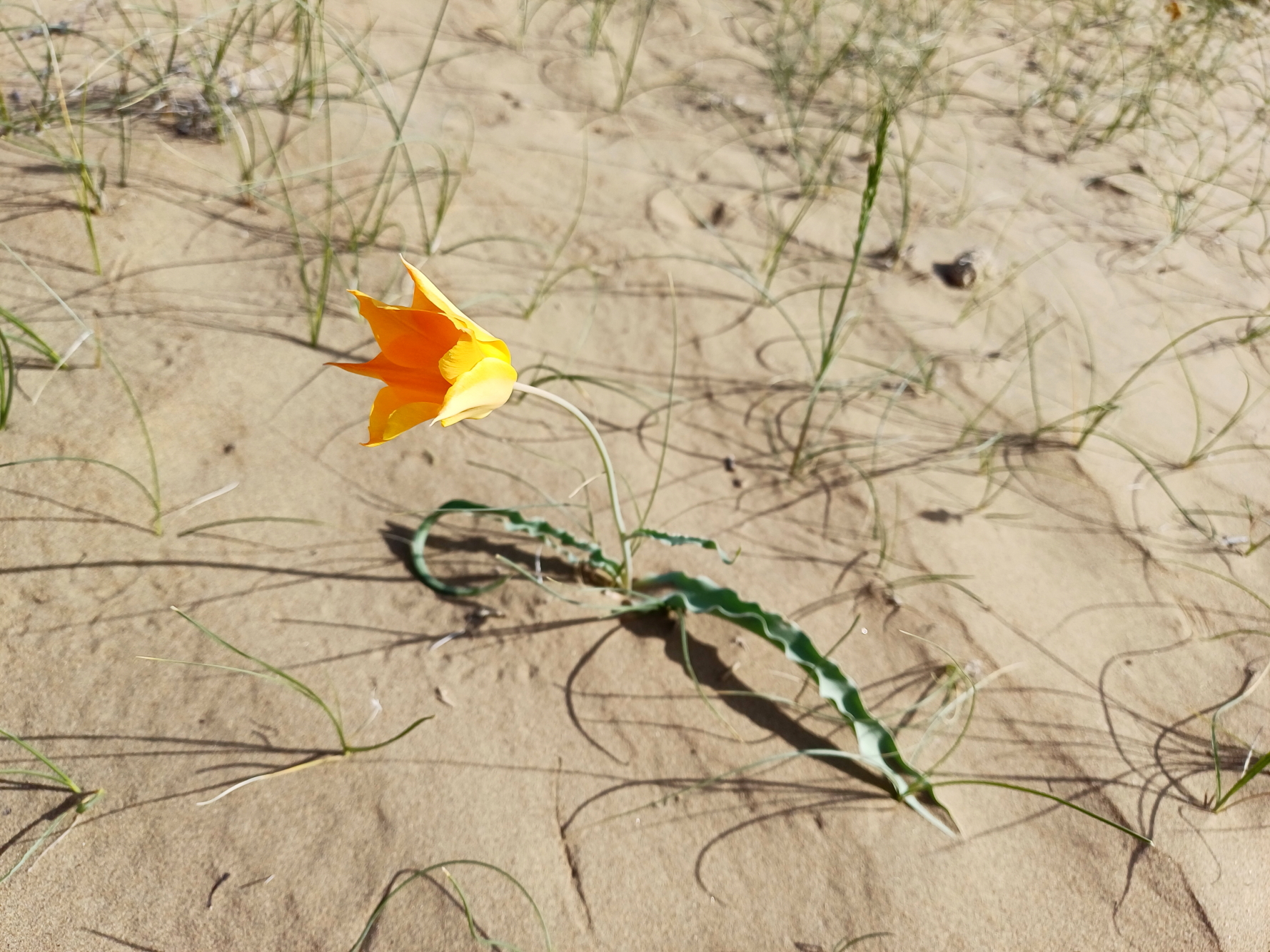
Gorgeous tulips were everywhere (Tulipa lehmanniana).

The yellow-flowered version was our favourite, just it was not as common as the red version.

Our favourite plant species was surprisingly a sedge -  Carex physodes. It was just gorgeous.

The "abundance" of grasses is very important source of biomass in the rangelands.

From this angle, it is more visible that indeed it is an important source of biomass!

Calligonum leucocladum bushes are important landmarks.

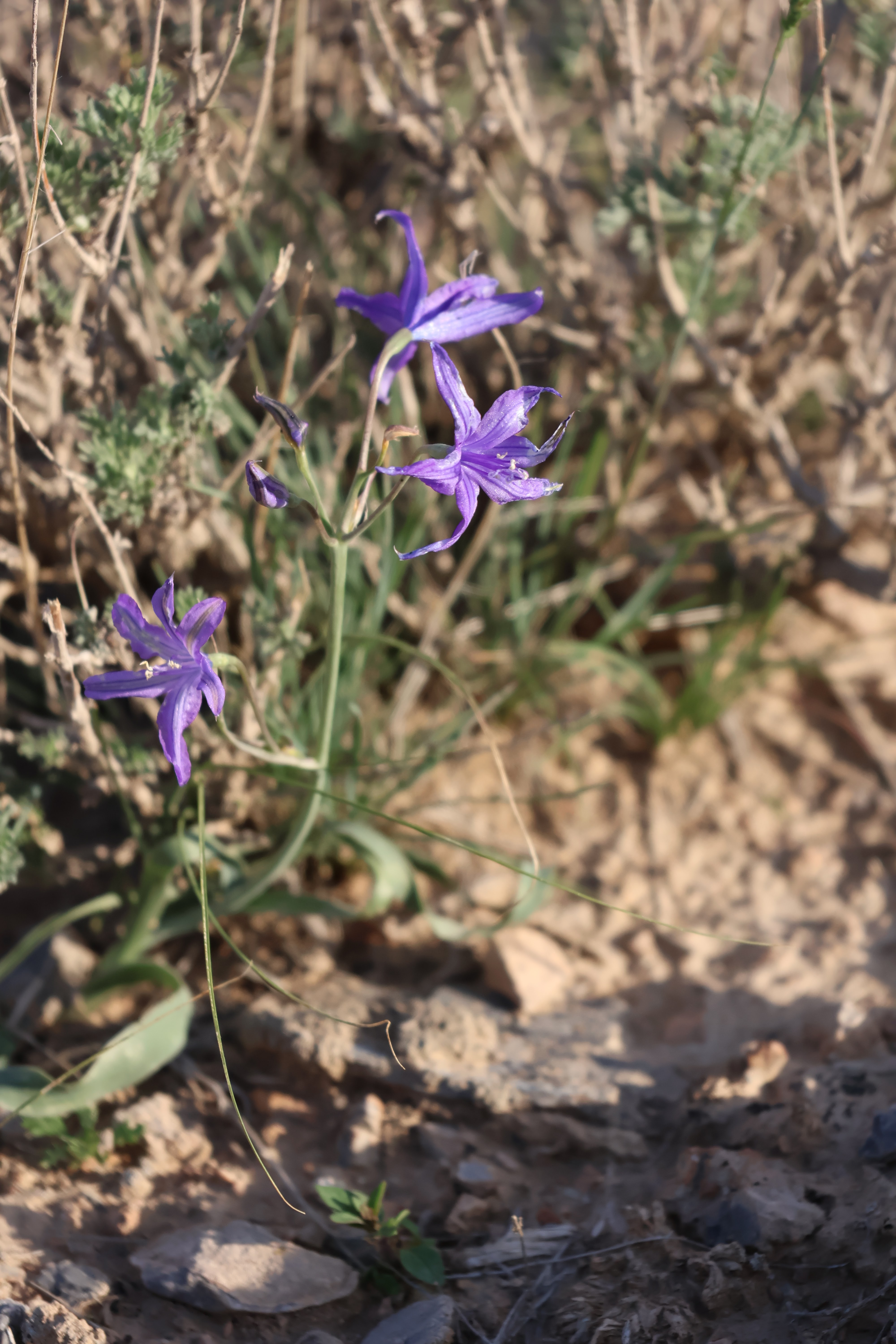
Siberian Lily (Ixiolirion tataricum)

One of the most important pasture plants is Artemisia diffusa, which provides excellent forage for livestock.

Peganum harmala is a plant that is poisionous even in very small quantitities. It is a typical plant in the sacrificed zones of abandoned wells.

Astragalus villosissimus.

Not easy to guess this: It is Convolvulus hamadae - not in its most spectacular form.

The cutest plant was the Bur Buttercup (Ceratocephala falcata).

But not as cute as the plant - Myosurus minimus - on the sweater of András :)

Moments of field sampling.

Everybody does everything simultaneously.

One of the hardest task was the soil sampling. The procedure on the picture was repeated 1 440 times... 

The boys developed various techniques for soil sampling, one of this was the 'hammer and stone' method.

Another technique was the 'dancing and jumping'.

And the group dancing and jumping :)

This is the precious stone of Balázs, which was his loyal companion during the sampling. It was broken later, but even its half did a very good job.

This is approx. half of all our samples - hundreds of kg-s.

Currently Abdubakir with the help of a lot of enthusiastic students is concentrating the soil samples at the lab of the SamSU.

Idillic campsite near the hills.

Other nice campsite in the desert, in the courtyard of our very kind hosts.

Group photo with our kind hosts (in the middle) and drivers (on the right)

One of the few lunchbreaks that we had :)

Registan - a very famous UNESCO World Heritage Site in Samarkand. One of the most beautiful building in the world!

Registan in the sunlight.

Beautyful courtyard

Wonderful handcrafted pottery in the Samarkand bazar.

Short excursion in a nice hilly landscape.